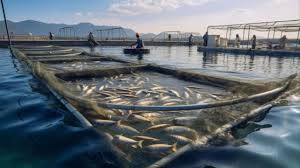
One of the oldest and most important areas of the world economy, the fish industry has expanded well beyond small fishing villages. It is now a multimilian dollar business that maintains livelihood, helps to ensure food security, and is important for global trade. Until the world’s fishing and seafood distribution, there is a sophisticated financial system at the center of this rich enterprise that takes the role of wheels.
Financial spinal cord of seafood industry
The fish business requires careful financial management like any other mass venture. Boats, net, storage facilities, processing units and transport require heavy investment. The industry cannot do effective or continuous function without a structured financing structure.
Fish contributes money to the financial system of industry:
Fishing operations: ship, fuel, equipment and fishermen are involved in salary.
Processing features: funding the facilities required to prepare, package and store fish products.
Cold storage and logistics-transport require high-tech supply chain and storage solutions to guarantee fresh fish.
Exports and Business: Using credit, insurance and foreign exchange management to support global sales.
This approach enables the field to maintain a steady increase by controlling cost, revenue and profits by controlling these financial requirements.
Source of finance in fish sector
Fish business receives money from various sources:
Government Assistance: To help fishing communities and promote permanent practices, many nations provide grants, low-comprehensive loans and subsidies.

Private Investment: To expand their operations, businesses invest in aquaculture farms, processing facilities and international supply networks.
Banking and Credit System: Before their catch is sold, fishermen often use credit to pay operational expenditure or purchase equipment.
Insurance gradient invests from threats including stock loss, equipment damage and natural disasters.
When combined, these resources provide a financial security trap that guarantees the stability of regions even in unexpected markets.
Financial system challenges
The financial structure of the fish industry faces many obstacles despite its importance:
Fish markets are extremely unstable worldwide, demanding income estimates due to ups and downs in demand and pricing.
Concern about overfing: Issues of environmental stability can cause strict rules affecting the budget.
Small-scale fishermen sometimes find it difficult to get financial services or loans in nations where credit is easily available.
Cost increase is caused by fuel prices, labor costs and sophisticated technology, which requires financial management.
These difficulties suggest that new financial solutions that can balance between stability and profitability are required.
Future of finance in fish industry
Modern financial equipment, including blockchain technology, mobile payment and digital banking, is being explained by this sector. These progressive seamless cross-border features commerce, increase credit availability, and transactions increase transparency. To promote moral fishing and aquatic farming methods, permanent financial structures are also being implemented.
final thoughts
The fish business is a complex economic sector that depends much more on a streamlined financial system; This is only more than boats and nets. The industry is maintained by the financial system, which is day -to -day financing from international commerce.

The financial system will be even more important to ensure that the fish business continues to feed the world and maintains the livelihood of millions of people because stability and technological progress attains importance.