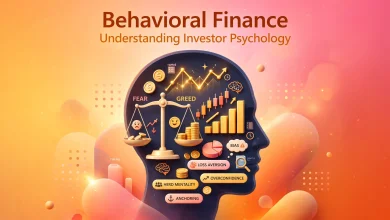
The traditional view of money suggests that we’re all perfectly rational, logical money managers. HAH! The truth is our emotions – and their irrationality – get in the way of logic.
Behavioral finance breaks down all the ways that we process information (both facts and feelings) regarding how we earn, spend, save and buy – often in ways that aren’t quite in our best interests.
Here’s a quick dive into some of the ways your money decisions likely get tossed out of balance:
1. Loss Aversion
“The pain of losing something is magnified extra than the satisfaction of acquiring the same.”
Why we fall for it: Investors hold on to laggardly investments too long, scared to “realize” their loss even when selling it would be the clearly smart financial choice.
2. Psychological Accounting
We psychologically categorize our money into separate buckets according to source or purpose.
Why we fall for it: You may have a huge credit card balance even though you also have an overstuffed savings account with next to no interest – you’ve siloed your cash!
3. Overconfidence Bias
“Individuals that are overly confident in their own abilities overestimate the likelihood of an outcome and also consequently might carry out actions such as too much trading or concentrated portfolios.”
Why we fall for it: This causes you to take more risks than you really are capable of handling.
4. Group Psychology
“The human inclination to comply with the behavior of a larger group, or ‘herd’ – purchasing when others are buying and also selling when others are selling – can magnify boom-and-bust cycles and also make it hard for investors to generate independent judgments.”
Why we fall for it: FOMO, baby!
5. Anchoring
We put way too much weight on the first piece of information we’re given.
Why we fall for it: An investor may stick with a stock, even though every indication is that it’s a loser, just because they bought it for way more.

6. Present Bias
We highly value rewards that are imminent as compared to future ones.
Why we fall for it: This is why retirement planning consistently comes second to enjoying the present!
7. Confirmation Bias
We have the tendency to seek out and interpret information in a way that confirms what we already believe.
Why we fall for it: If you have a favorite stock, you’ll read every good thing you can find while ignoring the bad.
8. Sunk Cost Fallacy
We’re tempted to stick with something, and continue to commit resources, because of the time, effort, and money we’ve already put into it.
Why we fall for it: We won’t let go of a losing stock because of all the money we’ve put into it so far!
9. Framing Effects
How the information is presented influences our actions, whether good or bad.
Why we fall for it: A 10% chance of a loss versus a 90% chance of a gain feel totally different, right?
10. Emotional Decision-Making
Fear, greed, euphoria or panic have the power to overrule our financial brains, particularly during uncertain times. Arguably, being able to recognize your emotions at the controls is the greatest asset an investor can have.
The Bottom Line
“According to Traditional Economic Theory,” writes psychologist Dr.
McGeorge, “we are perfectly rational decision makers who operate like little computers making the best possible economic choices.
Ha. Unfortunately for that theory, most of us don’t behave like little computers when it comes to our money. We act irrationally more than often.” In identifying your tendencies with the above biases, you’ll take important strides to overcome the forces that lead you to making bad money decisions, which will,

in turn, help you make much smarter ones that will only benefit you financially.
Thanks