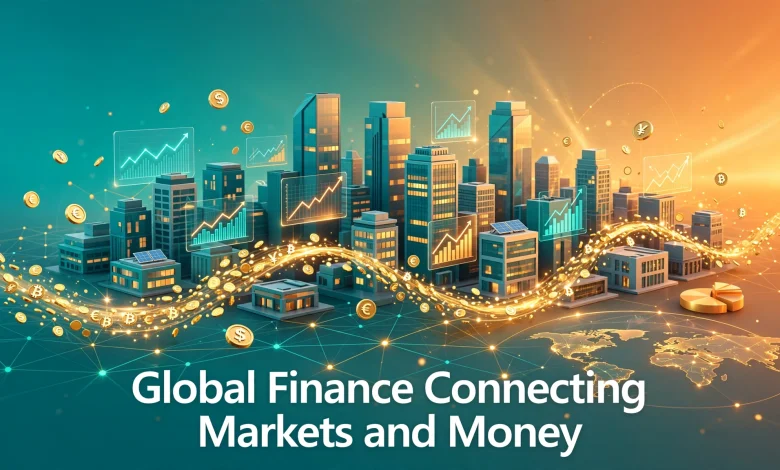
Global finance refers to the financial sector that comprises aspects of national financial systems as well as the international financial market. Trade, investment, currency, banking, and technology are key aspects of finance that contribute to the world’s financial system. In other words, a financial business understands the importance of global finance as a concept that provides insight into economic relations and approaches challenges and opportunities.
Connectivity in International Financial Markets
Global finance entails the circulation of money and financial assets between countries and their financial agents. In other words, it is a mechanism that allows businesses to borrow from each other and invest in one another, which benefits the world economy. For example, foreign trade and investment usually allow companies to seek funds from other nations and pay in their local or foreign currencies.
The Connection between Trade and International Finance
Notably, foreign trade is dependent on finance because international transactions involve the circulation of currency and money from one financial system to another. In any case, the role of financial institutions is critical since they allow firms to engage in trade activities and other financial functions.
The Concept of Foreign Exchange in Global Finance
Forex or foreign exchange refers to the conversion process of one currency to another. For example, some currencies are stronger than others depending on economic factors such as interest rates, inflation rates, and political stability and risks. Therefore, the value of one currency against the other determines international business, tourism, and forex investments.
Global Finance and Foreign Investment
In relation to the topic above, foreign investment is a significant aspect of portfolio investment. In other words, an investor can choose to invest in a foreign portfolio by purchasing bonds and stocks from abroad using their domestic currency. Ideally, the local currency can be used to buy foreign stocks, bonds, and other investment products. However, the same cannot be said about foreign investment since investors have to consider the risks involved with international finance.
The Role of International Banking in Global Finance
The role of international banking in global finance is undisputable seeing as businesses require loans, business-to-business financing, and forex trading to participate in international trade. In this case, banks offer a wide range of financial services from settlement to business financing, remittances, and foreign investment.

The Influence of Technology and Telecommunications on the Financial Sector
Financial technology and telecommunications are arguably the most significant developments in international finance, especially with regard to modern money transactions. In essence, technology has improved the payment systems, which have benefited the banking system and international investments through various financial technologically advanced platforms. Overall, developments in modern technology have allowed financial institutions and market players to stay ahead of the game.
Risks and Challenges in the International Financial Market
The international financial market involves risks such as interest rates, inflation rates, and currency variations that expose firms to financial challenges. Therefore, businesses and banks must implement risk management strategies to minimize the possible implications of international finance. In other words, the benefits of international finance may outweigh the possible risks, considering that a firm’s profits are likely to increase.
The Concept of Global Finance and Economic Development in Businesses
Organizations and firms stand to benefit from economic development in numerous ways, including increased foreign investment. In this case, the foreign capital allows a firm to grow its business both locally and internationally. Therefore, there is a proven relationship between economic development and global finance that benefit businesses and the economy.
International Market Volatility and Its Effect on Businesses and Financial Markets
Market volatility entails drastic price changes of securities and other financial instruments, which results in significant economic fluctuations affecting financial markets worldwide. For example, changes in interest rates or currency exchange rates pose financial challenges, such as a financial crisis, that affect businesses and the economy in general. In other words, international finance exposes firms to economic volatility, and they must be wary of the possible implications.
Global Finance Development Trends in the Future
As explained above, technology and telecommunications will continue to play a crucial role in financial transactions and markets in the future. In this case, digital currency will remain relevant because of its ease when it comes to money circulation and trading activities. Notably, financial technology, disruptive technology, and globalization will define the future of international finance.
Final Remarks
In summary, the global finance concept is remarkable in that it connects international financial markets and promotes economic development through foreign trade and investment activities.
In other words, financial businesses and investors take part in multiple opportunities in the financial market while dealing with international finance-related issues.
Thanks