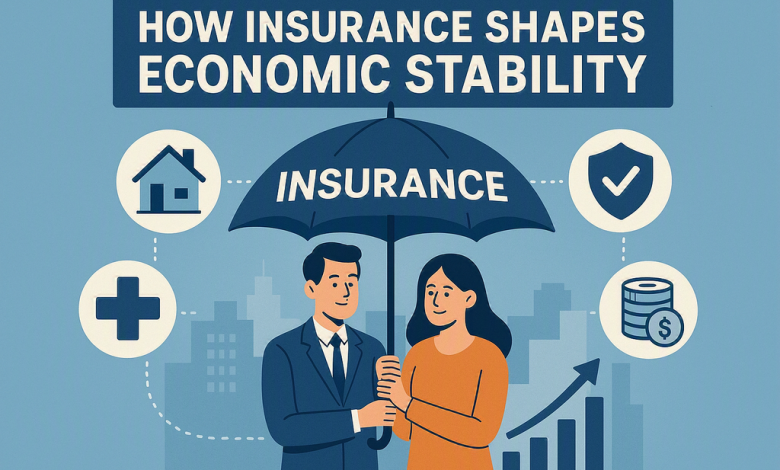
Beyond the individual – the “life preserver” as we so commonly know insurance – are larger economic impacts that facilitate the health and stability of our communities, our countries and the world economy. Read on to learn more about the role insurance plays to boost economic health beyond just the individual life it supports.
Risk Absorber
“Insurance is designed to absorb the shocks.” Insurers use individual premium payments to mitigate and cover widespread losses. This practice prevents a domino effect: imagine a large earthquake devastates half of a city’s businesses, resulting in each of them being unable to pay back their loans to local banks and unable to cover their bills from local suppliers. Without insurance, these failures would spread rapidly through a community, quickly impacting local and regional economies.
It also avoids systemic shock. Without insurance, a large failure – either a business or a property – would significantly set back the economies of affected areas for years, if not the entire country, and might even threaten financial systems in severe cases. Like government economic stimulus in the wake of disaster, the quick flow of insurance money back into the economy is vital for rapid recovery.
Supporting Entrepreneurship
The savings provided by business insurance helps entrepreneurs cope with the unexpected so they can stay focused on their long-term goals. Entrepreneurship is not just the “it” idea of the century, and entrepreneurs often can’t save hundreds of thousands of dollars in a “rainy day” fund before starting a new venture.
With insurance, entrepreneurs can protect themselves against the unexpected at an affordable cost, which gives many entrepreneurs confidence to begin their journey of launching new companies. From the person building the first high-rise building to the new developer designing a revolutionary medical device, business insurance gives these innovators the security to pursue large projects by mitigating risks. Without business insurance, much of entrepreneurial activity simply wouldn’t exist.
Bolstering Global Markets
The role of insurers in investing on global markets helps bolster economic stability. Every dollar invested by an insurer is invested in global stock and bond markets.
Insurers hold large pools of capital: each premium dollar that is paid into an insurer represents an investment opportunity and a part of global stock and bond markets. This is long-term, not short-term, capital: because insurers can plan to pay out claims in the future (but not all simultaneously), insurers are long-term investors. They don’t need to liquidate assets and withdraw funds at times of stress to earn short-term gains.
This makes insurers systemically important: insurer holdings are significant enough that they may be of concern to the government – meaning they, like banks, may need to be backed by government resources.
Keeping Workers Communities and Governments in Good Health
Even when businesses are going through difficult times, insurance can help to weather the storm.

Business Continuity
Even if your business property is devastated in a fire or the business has to shut down to deal with a large lawsuit, the business owner can still pay employees while damages are handled by the insurance company.
Protection of Workers
Even in the most dire circumstances, job loss is disruptive. Workers’ compensation acts as a form of business insurance that reduces disruptions to the workforce following a workplace injury.
Stabilizes Governments
Many people today don’t know it, but the government uses many of the same insurance products as businesses. Disaster relief funds: without a home insurance product, governments become the lender of last resort when disasters hit, in order to protect homeowners affected by these natural catastrophes. Social safety nets: many governments use insurance as a basis for social welfare programs such as social security and universal health care, because they group risks together for the good of all society. Insuring economic development: the government may require businesses to obtain certain types of insurance policy so that companies do not risk the livelihoods of others.
When Insurance Systems Fail
Most insurance companies do a great job helping to keep our communities and economies afloat. When things go wrong in the insurance world, headlines can and do take notice.
Underinsured populations in case of disaster: if, for example, large geographic areas consist of homeowners without a home insurance product, then their recovery costs after a large disaster are covered by the taxpayers. Financial insolvency: if a large insurer were to go bankrupt under extreme circumstances, that news can shake global markets and send shock waves through to consumers who depend on their policies and even the bond markets where the company debt is traded. The ability for businesses to pay their debts would not only fall on individual businesses but even on local or federal government too if a large number of insurers were to go bankrupt.
The Role of Insurance in Economic Activity
Beyond the use of the product to protect the individual, there are numerous roles of insurance to the greater economy, from innovation and job creation through to risk-sharing for societal progress. When insurance functions correctly,

the society that supports it benefits in immeasurable ways from enhanced economic performance and improved living standards.
Thanks